

What if having more people to meet makes it harder to choose someone well? The pros and cons of modern dating apps start with that tension: they widen access to potential partners, yet a constant stream of profiles can dilute attention. It’s understandable to feel worn down by conversations that go nowhere, or unsure whether a profile reflects a real person and clear intentions.
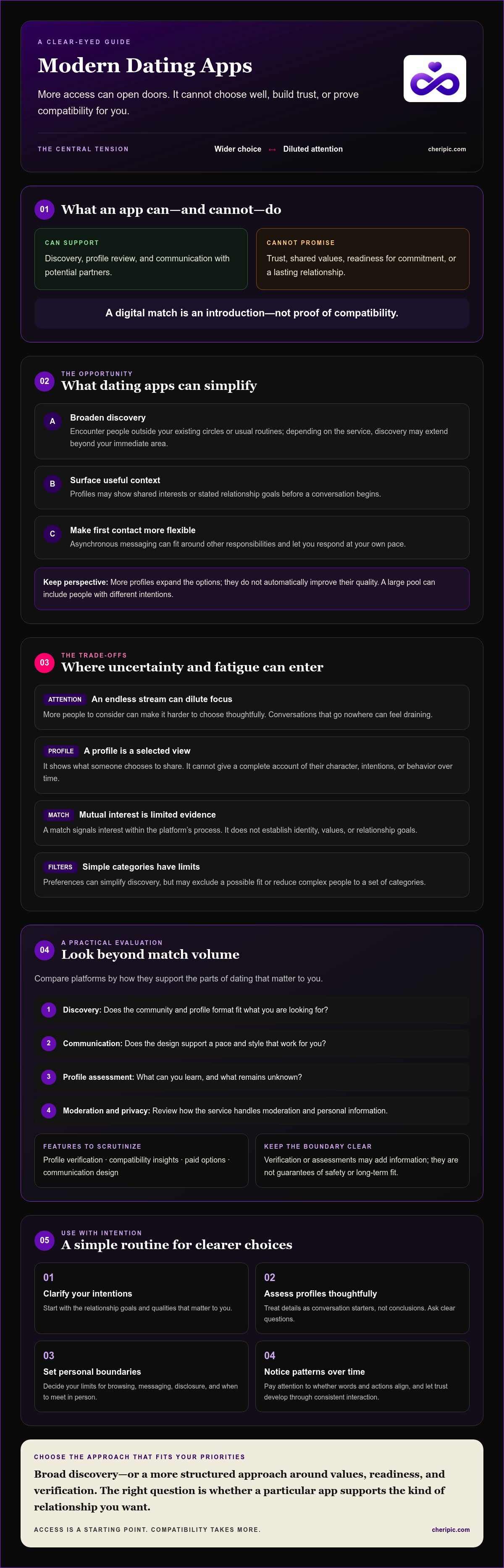
Dating apps can make discovery more convenient, but convenience alone doesn’t create trust, compatibility, or momentum toward meeting in person. The experience varies by platform, from swipe-based browsing to services that emphasize verification, compatibility insights, or other ways to connect. The right question isn’t whether every app works. It’s whether a particular app supports the kind of relationship you want.
This guide will help you assess the benefits and trade-offs without treating dating apps as interchangeable. You’ll learn what they can simplify, where they can consume time or create uncertainty, and which features deserve careful scrutiny, including profile verification, privacy practices, paid options, and communication design. Most importantly, you’ll have a clearer basis for deciding whether and how to use them with intention.
Key Takeaways
- Evaluate the pros and cons of modern dating apps based on your relationship goals, not match volume alone.
- Compare platforms by how they support discovery, communication, profile assessment, and moderation.
- Set personal boundaries for browsing, messaging, disclosure, and deciding when to meet in person.
- Use a simple routine to clarify your intentions, assess profiles thoughtfully, and notice patterns over time.
- Consider whether broad discovery or a more structured approach around values, readiness, and verification better fits your priorities.
What modern dating apps offer and what they cannot promise
Modern dating apps are digital services that help people discover, assess, and communicate with potential romantic partners. They create opportunities for an introduction, but they don’t establish a relationship. A profile, a conversation, or even mutual interest on a platform is only a starting point. Trust, shared values, and readiness for commitment take more than access to one another.
That distinction matters when weighing the pros and cons of modern dating apps. Apps differ in the people they attract, how they present profiles, how they suggest potential matches, and how they handle moderation. Some focus on browsing and messaging; others add tools intended to support reflection or assessment. The history and evolution of dating apps offers context for how digital introductions have shifted from websites to mobile services, but no single model represents every user’s experience.
How profile discovery and matching generally work
In a typical process, users create profiles, review other people’s information, and indicate interest. When interest is mutual, the platform may allow them to message. Users can often set preferences, such as an age range or location, while a service may also recommend profiles through its own system. These are different inputs: a selected preference reflects what a user requests, while a recommendation reflects how the platform organizes or presents options. Neither, by itself, demonstrates compatibility.
What a dating app can and cannot tell you
A profile gives a selected view of a person: details they choose to share, photos, and perhaps answers to prompts. It can’t provide a complete account of their character, intentions, or behavior over time. Likewise, a match generally signals mutual interest within that platform’s process. It doesn’t confirm that either person’s identity, values, or relationship goals have been independently established.
A digital match is an introduction, not proof of compatibility. Treat profile details as conversation starters, not conclusions. Ask clear questions, notice whether words and actions align, and allow trust to develop through consistent interaction. Features such as identity or profile verification and compatibility assessments may offer additional information when a platform provides them, but they aren’t guarantees of safety or long-term fit. The useful question isn’t simply whether an app can produce matches. It’s what evidence you still need before deciding to invest your time and attention.
The advantages of modern dating apps: access, choice, and convenience
Dating apps can widen the circle of people you’re able to consider. Someone with a demanding work schedule, caregiving responsibilities, or a small local social network may find it difficult to meet new people through routine activities alone. Digital discovery can supplement those opportunities, helping users encounter people outside their existing circles or, depending on the service, beyond their immediate area.
That broader reach is an opportunity, not a guarantee of better connections. A large pool can include people with different intentions, and the profiles available to you depend on the app’s community and your location. Pew Research Center’s overview of recent online dating trends provides context on how people experience online dating in the U.S. The practical question is whether a particular platform serves the communities and relationship intentions you’re looking for.
A wider pool of potential connections
Online discovery can be especially useful when your usual routines bring you into contact with the same people. Profiles may also make it easier to notice shared interests or stated relationship goals before starting a conversation. Still, visibility is not compatibility. Consider whether the app’s active local community, profile format, and focus align with what matters to you. More profiles expand the options; they don’t automatically improve the quality of those options.
Control over pace, preferences, and first contact
Profiles and available filters can help you search for basic preferences, such as location, interests, or relationship intentions. Use them as starting points, not rigid definitions. Filters simplify discovery, but they can also exclude people who might be a good fit or reduce complex individuals to a set of categories. Asynchronous messaging offers another practical benefit: you can respond around other responsibilities rather than needing to talk in real time.
This flexibility can help you use limited time with more purpose. For example, someone balancing work and caregiving might review a few profiles when convenient, then return to a promising conversation later. The result depends on more than app design: profile accuracy, user behavior, and the size and character of the local community all shape the experience. A stated preference is useful only if it reflects what you genuinely want, and a polished profile still calls for thoughtful judgment.
If profile browsing alone feels too unstructured, a relationship-intelligence approach may offer more room to reflect on values and compatibility. Explore relationship compatibility tools as one possible way to bring more structure to early assessment, without treating any platform feature as a guarantee of fit.
The disadvantages of modern dating apps: fatigue, uncertainty, and safety
The same features that broaden discovery can create friction. A steady stream of profiles may encourage comparison instead of careful attention, and messaging can take time without clarifying whether two people share intentions or want to meet. These are possible patterns, not universal outcomes. App design, individual habits, and the people using a platform all shape the experience.
A larger number of matches or messages doesn’t necessarily mean greater relationship quality. It can mean more conversations to assess, not more evidence of shared values, readiness, or respect. The pros and cons of modern dating apps are easier to evaluate when you measure progress by the quality of interactions, rather than by activity alone.
Choice overload and the messaging loop
Continuous browsing can make each profile feel like one option among countless others, which may complicate focus and decision-making. Extended messaging can also create a sense of investment before people have clarified their intentions or met in person. If a conversation stays active but goes nowhere, consider asking directly what the other person is looking for and whether they’re open to meeting, if that feels appropriate to you.
Trust, privacy, and emotional effort
Profiles are curated. Photos or descriptions can create misleading impressions, while unwanted contact and privacy concerns may vary by platform and user behavior. Before sharing sensitive details, review the app’s privacy settings and current safety guidance. Keep personal information limited until trust has developed, and pay attention to whether someone’s actions match what they say.
Identity verification may offer a useful signal, but it has limits. An identity check can support confidence about who someone is; it can’t guarantee safe behavior, honest intentions, or compatibility. Learn what a platform’s verification process does and doesn’t establish before relying on it. For a closer look at what to evaluate, read this guide to dating app identity verification.
How to use dating apps deliberately without losing your own criteria
The value of dating apps depends partly on how you use them. A clear routine helps protect your time and keeps your choices aligned with what you actually want, rather than with whichever profile or conversation has your attention at the moment. Use these steps as a flexible framework, not a rigid test.
- Define your intentions. Identify what kind of relationship you’re seeking and which values or needs matter most. For questions that can help you consider shared direction, explore this guide to relationship compatibility assessment.
- Set a time boundary. Choose when and how long you’ll browse or message. A planned check-in can make app use more deliberate and leave room for work, caregiving, friendships, and other offline priorities.
- Assess profiles thoughtfully. Look for details that connect to your priorities, but treat profile language as an opening for conversation, not conclusive evidence. Remember what information you’ve decided to keep private, and don’t disclose it before you’re comfortable.
- Communicate clearly. Ask respectful, direct questions about relationship goals when the conversation makes it natural. You’re seeking clarity, not conducting an interrogation. Set your own limit for how long you want to message before considering an in-person meeting, and proceed only when you feel ready.
- Review patterns. Notice whether actions align with stated intentions across interactions. Consistency, respect for boundaries, and follow-through are more informative than profile wording or early chemistry alone.
Set intentions and boundaries before browsing
Decide what matters before the app presents a stream of options. You might prioritize emotional availability, a shared view of commitment, or a particular life direction. Set a routine that fits your schedule, and determine in advance which personal details stay private. These boundaries aren’t barriers to connection; they help you make choices without surrendering your judgment or attention.
Move from profile impressions to observable behavior
Ask questions that invite an honest exchange, then observe how the person responds. Do they answer directly? Do they respect your pace? Do their choices remain consistent with what they’ve said? A repeated mismatch is more useful information than a single polished statement. For more perspective on recognizing recurring patterns, read about understanding ignored relationship red flags.
The pros and cons of modern dating apps don’t disappear through careful use, but a personal framework can help you engage without letting browsing or messaging replace discernment. If you want a more structured way to reflect on compatibility, explore CheriPic’s relationship tools.
Choosing a dating approach that supports meaningful connection
The right approach depends on what you want from the process. If your priority is meeting people beyond your existing circles, a platform built around broad discovery may suit you. If you’d rather reflect on values, relationship readiness, or identity verification earlier, a more structured approach may feel more aligned. Neither is universally better, and no platform can promise a particular relationship outcome.
A practical framework for comparing platforms
Look beyond the number of profiles or matches. Compare how each service introduces people, what profile controls it offers, how clearly it explains privacy practices and moderation, and which communication features shape interaction. Ask whether its tools help you assess stated intentions and values, or mainly make it easier to browse more options. Check the platform’s current features and policies directly before deciding, since these can change.
- Discovery: Does the format fit how you want to encounter potential partners?
- Profile controls: Can people express the information and intentions you consider relevant?
- Privacy and moderation: Are policies and guidance easy to find and understand?
- Communication: Does the design support the pace and type of interaction you prefer?
- Assessment: Do available tools encourage reflection, or primarily increase profile browsing?
This comparison makes the pros and cons of modern dating apps more personal. You’re not choosing an abstract “best” app; you’re assessing whether a platform’s design supports your priorities and boundaries.
When relationship intelligence may fit your priorities
People seeking more reflection around compatibility may prefer a relationship-intelligence approach over traditional swipe-based dating. CheriPic describes itself as a relationship intelligence platform, not a swipe-based dating service or human matchmaking service. Its stated tools include identity and profile verification, relationship compatibility assessments, values and emotional-readiness insights, and CheriAI relationship coaching. These tools can inform reflection, but they don’t guarantee safety, compatibility, or a lasting relationship.
For more context on this approach, read the relationship intelligence platform guide. Before choosing any service, confirm which features are currently available and review how its stated tools work. Then decide whether that structure genuinely serves your goals.
If this approach fits what you’re looking for, Explore CheriPic.
Choose the approach that keeps your goals in view
The pros and cons of modern dating apps come down to more than convenience. Apps can broaden discovery, but more profiles, matches, or messages don’t necessarily create stronger connections. Your experience depends on the platform, your boundaries, and how thoughtfully you assess another person’s actions and intentions over time.
Choose a service that fits what you’re seeking, whether that means broad discovery or more structure around values, readiness, and verification. Protect your time and privacy, communicate clearly, and treat platform features as useful information, not proof of compatibility or safety.
CheriPic is a relationship intelligence platform with identity and profile verification tools, relationship compatibility assessments, and CheriAI relationship coaching. These tools can support reflection, but they can’t guarantee a particular outcome. If a more intentional approach aligns with your priorities, Explore CheriPic’s approach to intentional connection.
Move at a pace that respects your judgment. You can pursue connection with curiosity while still holding to the standards that matter to you.
Frequently Asked Questions
Are modern dating apps worth using if I want a serious relationship?
They can be worth trying if the app’s community and features align with your relationship goals. State your intentions clearly, look for people who express compatible aims, and assess whether their behavior is consistent over time. Set limits on browsing and messaging so app use remains one way to meet people, not a substitute for your judgment or offline life. A serious relationship is possible, but no app can promise one.
What are the biggest advantages and disadvantages of dating apps?
The main advantages are broader access to potential partners, flexible communication, and ways to share preferences early. The trade-offs can include choice overload, time spent messaging, uncertainty about profiles and intentions, and privacy or unwanted-contact concerns. These are central pros and cons of modern dating apps, but their relevance depends on the platform and how you use it. Compare features and policies rather than assuming every app creates the same experience.
Can dating apps help people find a compatible partner?
Yes, dating apps can help compatible people discover one another, but a match alone can’t establish compatibility. Profile details and filters may help surface shared interests or stated relationship goals. Use them to begin a conversation, then ask thoughtful questions and observe how the person communicates and follows through. Compatibility becomes clearer through interaction over time. Some platforms also offer assessments or insights, which can inform reflection but don’t guarantee a good fit.
Are dating apps safe to use?
No app can guarantee a safe experience, so use features and personal boundaries together. Review the platform’s privacy settings and safety guidance before sharing sensitive information. Be cautious about requests for money or personal details, and choose an in-person meeting only when you feel ready and have considered your own safety. Verification or moderation tools may provide useful signals, but they don’t establish someone’s intentions or guarantee how they’ll behave.
Why do dating apps feel exhausting or overwhelming?
Apps can feel draining when frequent profile browsing, repeated introductions, or extended chats demand more attention than they return. A constant flow of options may also make it harder to focus on one conversation or decide what matters to you. The experience isn’t the same for everyone. Try limiting app sessions, pausing when use feels stressful, and prioritizing conversations that show mutual effort and clearer intentions.
How can I use dating apps without wasting time?
Start by defining what you’re seeking and which values matter most. Set a realistic boundary for browsing and messaging, and decide what personal information you’ll keep private. Use profiles as conversation starters, ask respectful questions about relationship goals, and notice whether actions match stated intentions. If a conversation remains active without moving toward clarity, consider whether it still serves your goals. Review your patterns and adjust your routine as needed.
Do dating apps verify that users are who they say they are?
Some platforms offer identity or profile verification, while others may provide different checks or none at all. Don’t assume a badge means the same thing across apps. Read the platform’s current explanation of what it verifies and how the process works. CheriPic offers identity and profile verification tools, but verification isn’t proof of someone’s character, intentions, or compatibility. Treat it as one piece of information, alongside your own judgment and boundaries.


