

What if confidence after a bad breakup doesn’t mean believing nothing will go wrong? It can mean trusting yourself to notice what feels right, respond when something doesn’t, and choose a pace that suits you. Learning how to date with confidence after a bad breakup starts with that shift, not with forcing yourself to feel completely healed.
If you worry a new connection will repeat old pain, or you’re questioning your judgment after a relationship ended badly, your hesitation makes sense. Readiness isn’t a deadline, and it doesn’t require erasing every difficult feeling. You can be open to meeting someone while still protecting your time and emotional energy.
This guide will help you check in with your own readiness, rebuild self-trust through manageable actions, and set boundaries without apologizing for them. You’ll also learn how to pace new connections deliberately, so dating becomes a chance to gather information and make choices that fit your needs, not a test you have to pass.
Key Takeaways
- Learn how to date with confidence after a bad breakup by treating readiness as a personal assessment, not a deadline.
- Review what you learned from the relationship without taking responsibility for another person’s harmful choices.
- Use gradual, low-pressure steps to make dating choices that feel manageable and intentional.
- Set clear limits around messaging, meeting, and sharing personal history, then communicate them calmly.
- Check in with yourself and adjust your pace if dating no longer feels aligned with your needs.
How to date with confidence after a bad breakup starts with readiness, not a deadline
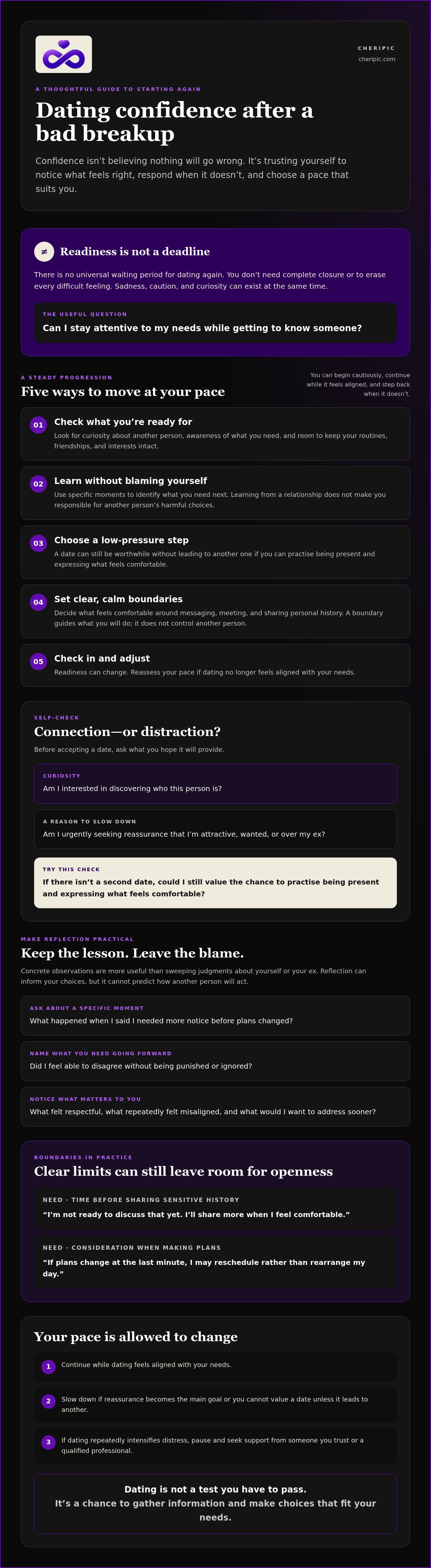
Dating confidence isn’t certainty that a new relationship will work. It’s trust in your ability to make choices, communicate boundaries, and respond thoughtfully when the outcome is unclear. Feeling sad, cautious, or conflicted doesn’t automatically mean you’re unready. Those feelings can exist alongside genuine interest in meeting someone.
There is no universal, evidence-based waiting period that determines when you should date again. Readiness also doesn’t require complete closure. You may still think about the relationship or feel occasional sadness while approaching someone new with care and curiosity.
What does readiness to date again actually look like?
Readiness is a flexible capacity, not a feeling-free state. You might notice curiosity about another person, awareness of what you need, and a willingness to keep your routines, friendships, and interests intact while dating. Self-esteem can affect how you interpret setbacks. Learning about rebuilding dating confidence may help you consider how self-worth shapes those reactions.
Compare that with dating mainly to numb distress or prove you’re desirable. A disappointing date may still sting, but it shouldn’t determine your worth or pull you away from the life you’re rebuilding.
How can you tell whether you want connection or distraction?
Before accepting a date, ask yourself what you hope it will provide. Are you interested in discovering who this person is, or do you urgently need reassurance that you’re attractive, wanted, or over your ex? Wanting comfort is human. But when reassurance becomes the main goal, it can be harder to assess the other person clearly.
Try this check: if the date doesn’t lead to a second one, could you still value it as a chance to practise being present and expressing what feels comfortable? If not, consider slowing down. If dating repeatedly intensifies distress, take a pause and seek support from someone you trust or a qualified professional. There’s no penalty for reassessing your readiness.
To understand how to date with confidence after a bad breakup, focus less on proving you’re completely healed and more on whether you can stay attentive to your needs. Readiness can change. You’re allowed to begin cautiously, continue only while dating feels aligned, and step back when it doesn’t.
Rebuild dating confidence by learning from the breakup without blaming yourself
A painful relationship can leave you questioning your judgment. Reflection can restore perspective, but it’s useful only when you separate what you want to learn from what was someone else’s responsibility. You might decide to raise concerns earlier next time. That doesn’t make you responsible for a former partner dismissing those concerns or breaking an agreement.
Use specific moments to identify what you need going forward. Instead of concluding, “I always choose the wrong people,” ask, “What happened when I said I needed more notice before plans changed?” or “Did I feel able to disagree without being punished or ignored?” Concrete observations give you more useful information than sweeping judgments about yourself or your ex.
Which lessons from your last relationship are useful to carry forward?
Consider what felt respectful, what repeatedly felt misaligned, and what you’d want to address sooner in a future connection. Perhaps you valued regular check-ins but felt unsettled when plans changed without explanation. A practical lesson might be to discuss communication expectations and notice whether they’re respected, rather than assuming every new person will behave the same way.
Keep the focus on awareness, not diagnosis. You don’t need to label your former partner or yourself to recognize a recurring situation and decide what you need next.
Reflection can inform your future choices, but it cannot predict how another person will act. Learning gives you a clearer basis for decisions, not certainty about outcomes.
How do you turn lessons into boundaries without becoming guarded?
A useful boundary states what you’re comfortable with and what you’ll do if that limit isn’t respected. It guides your actions; it doesn’t control another person. For example:
- Need: Time to get to know someone before sharing sensitive history. Boundary: “I’m not ready to discuss that yet. I’ll share more when I feel comfortable.”
- Need: Plans made with consideration. Boundary: “If plans change at the last minute, I may reschedule rather than rearrange my day.”
Being open doesn’t require ignoring behavior that troubles you. If you catch yourself explaining away repeated discomfort, it may help to explore why people ignore red flags, then focus on the specific actions and how they affect you. A boundary isn’t a rule every date must pass. It’s a standard you can communicate and uphold.
If you’re considering how to date with confidence after a bad breakup, treat each lesson as information, not a forecast. For another perspective as you make intentional choices, explore personalized relationship insights through CheriAI.
Use small, low-pressure dates to practise self-trust
Confidence grows when you make choices that respect your limits, not when every date ends with someone else’s approval. You don’t need to jump straight into an intense evening or a search for a new relationship. Reconnect in stages: spend time with friends, attend a social activity you enjoy, have a relaxed conversation with someone new, then consider a short first date if you feel curious.
Each step gives you a chance to notice your reactions and choose what to do next. For a first date, you might pick a public café, agree on a clear time window, and arrange your own transportation. You can stay if you’re comfortable or leave when the time is up without relying on your date to end the evening.
How can you make a first date feel manageable?
Keep the plan simple and specific. A walk in a busy public place or a coffee meet-up gives you room to talk without making the date feel like a major commitment. Before you go, decide what length of time feels manageable and how you’ll get home independently.
Have a few open questions in mind, but don’t turn them into a script. You could ask, “What do you enjoy doing when you have a free afternoon?” or “What’s something you’ve been interested in lately?” The goal isn’t to perform or manufacture chemistry. Notice whether you feel comfortable speaking, curious about their answers, and treated with respect.
A low-pressure first date: choose a public place, set a time limit, and make your own way there and home.
What should you do after a date to strengthen self-trust?
Take a few minutes to review the experience before calling it a success or failure. How did you feel before, during, and afterward? Did you feel at ease enough to be yourself? Did you express a preference or boundary? Is there anything you want to ask about or handle differently next time?
Separate the outcome from your conduct. A date can end without a second meeting, and you can still have acted in line with your values by being honest, attentive, and respectful of your own limits. That matters more than securing another person’s approval.
A relationship compatibility assessment can also offer prompts for considering what matters to you in a connection. Use it as a reflection resource, not a verdict on whether someone is right for you. As you practise how to date with confidence after a bad breakup, let each manageable experience show you what feels aligned, then adjust your next step.
Set a dating pace that protects your boundaries and emotional energy
Pacing is about more than deciding how soon to meet. It includes how often you message, when you’re comfortable seeing each other in person, and how much personal history you want to share. You can enjoy getting to know someone without making yourself constantly available or disclosing painful details before trust has had time to develop.
Set expectations plainly and calmly. You might say, “I’m not always able to text during work, but I’ll reply when I can,” or, “I’d like to meet in person before having long conversations by message.” These are preferences, not tests. Notice whether the person responds thoughtfully and respects your limit over time.
How do you communicate boundaries while dating again?
Use direct language that makes your choice clear without overexplaining. Try, “I’d like to take things more slowly,” “I’m ready to head home now,” or, “I don’t think this is the right fit for me, so I’m going to end the date here.” You don’t owe someone a detailed account of your breakup before you’re ready to share it.
Then let your next steps match what you’ve said. If you’ve asked for more time, you can decline another plan until you feel comfortable. A boundary isn’t a demand that the other person change; it’s clarity about what you’ll choose for yourself.
How can you stay open without ignoring your own signals?
Some nervousness is normal when meeting someone new. Notice whether it eases as you talk or whether you feel pressured, dismissed, or unable to say no. You don’t need to treat one awkward moment as proof of someone’s character. Instead, look for patterns in their communication, consistency, and respect across interactions. One positive gesture doesn’t establish trust, and one imperfect moment doesn’t always explain the whole dynamic.
For online dating, basic trust practices can support more informed decisions. Before meeting, consider whether the person’s identity and profile information seem consistent, and choose a public setting for an initial meeting. A guide to identity verification can offer a structured overview, but no single check guarantees safety or compatibility.
Learning how to date with confidence after a bad breakup includes staying receptive while taking your own discomfort seriously. CheriPic offers identity and profile verification tools to support more informed choices. Explore identity and profile verification as one part of a deliberate approach to connection.
Date with confidence after a bad breakup by choosing intentional next steps
Confidence is built through decisions you can repeat, not a promise that dating will never feel uncertain. Before taking a next step, check whether you have enough emotional space for it. Decide what boundaries would help you feel grounded, choose one manageable action, then reflect on how it felt. You can repeat the process or revise it as your needs become clearer.
What does an intentional dating plan look like this month?
Make your plan small enough to keep. You might choose one social activity, accept one date if you feel genuine curiosity, or spend time clarifying what you want from a relationship before meeting anyone. Set a check-in point afterward, such as the end of the week, and ask whether the experience felt aligned with your priorities.
Keep your routines, friendships, and interests on the calendar too. Dating should make room for connection, not become the measure of your progress. Ask yourself: Did I respect my limits? Did I learn something about what I want? Progress can mean greater clarity or choosing to pause. It doesn’t depend on matches, dates, or relationship status.
If dating starts to feel draining, adjust your plan. Take a break, spend less time on it, or return to social activities without a romantic goal. Changing course isn’t failure; it’s a decision based on new information.
How can relationship intelligence tools support deliberate choices?
Some tools can give structure to the questions you ask as you get to know someone. Identity and profile verification can support informed online-dating choices, while relationship compatibility assessments can prompt conversations about preferences and priorities. Neither can establish what someone will do over time or guarantee a successful relationship. Treat them as aids to judgment, not substitutes for paying attention to your own experience.
CheriPic is an optional relationship intelligence platform with identity and profile verification, compatibility assessments, and personalized insights through CheriAI. Check current membership access and availability if you’re considering its features. CheriAI’s insights aren’t therapy and don’t replace support from a qualified mental health professional. A guide to relationship intelligence platforms can help you evaluate what these tools may contribute and where your own judgment remains essential.
Learning how to date with confidence after a bad breakup doesn’t require a perfect plan. It takes a deliberate next step, an honest check-in, and permission to adjust. Relationship insights can be one optional resource for reflecting on what matters in a connection, but no tool can guarantee compatibility.
Let your next step reflect the confidence you’re building
Learning how to date with confidence after a bad breakup isn’t about guaranteeing a different outcome. It’s about making choices you can stand behind: noticing what you need, honoring your limits, and staying curious without rushing trust. A date’s outcome doesn’t determine your progress. Your ability to respond with self-respect does.
Keep your next step proportionate to how you feel. You can pause, change your pace, or seek support if dating brings up more distress than connection. That flexibility is part of intentional dating, not a setback.
If added context would help you make informed choices, CheriPic offers identity and profile verification tools, relationship compatibility assessments, and personalized insights through CheriAI. These tools can support reflection, but they can’t guarantee compatibility or replace professional mental health care. Explore CheriPic’s relationship intelligence platform as an optional resource.
You don’t have to feel fearless to begin. A grounded next step, chosen on your terms, is enough.
Frequently Asked Questions
How long should I wait to date after a bad breakup?
There is no universal waiting period that determines when dating is appropriate. Consider what you can manage now: can you stay curious, communicate limits, and accept uncertainty? If you’re dating mainly to avoid intense distress or regain an ex-partner’s attention, pausing may help clarify your motivation. Choose based on your wellbeing and capacity, not a calendar rule. You can reassess later.
How do I know if I am ready to date again after a breakup?
You may be ready to explore dating if you can make choices based on your own interests, communicate limits, and accept that a date may not lead to another. You don’t need to feel nothing about your former relationship. Notice how dating affects you. If each interaction repeatedly feels overwhelming, take more time or talk with someone you trust before deciding what comes next.
Can you date while you are still healing from a breakup?
Yes, you can choose to date while still processing a breakup, as long as you approach it thoughtfully and honestly. Keep the pace manageable, avoid promising more than you can offer, and maintain support from friends or other trusted people. Dating is optional, not proof that you’ve moved on. If it starts to feel like a way to escape difficult emotions, you can pause without treating that choice as failure.
How do I stop being afraid of getting hurt again?
You can’t remove all uncertainty from dating, but you can make choices that support safety and self-trust. Set limits that feel right, choose meeting arrangements that help you feel comfortable, and notice how the other person responds when you express a preference. Learning how to date with confidence after a bad breakup means focusing on actions that reflect your values, not trying to guarantee a particular outcome.
What should I tell a new date about my past relationship?
Share only what feels relevant and comfortable; you don’t owe a full account of your breakup on an early date. You could say, “My last relationship ended, and I’m taking dating thoughtfully.” If you choose to share more later, do it at a pace that feels right. Notice whether the person respects your choice not to discuss details yet, rather than pressing you for an explanation.
How do I avoid repeating the same relationship mistakes?
Look at specific situations from your past relationship without turning them into judgments about yourself or assumptions about everyone you’ll meet. For example, identify a need you didn’t voice or a limit you want to state earlier next time. Use that observation to guide a choice, such as asking a direct question or slowing down. Reflection can improve your awareness, but it can’t predict another person’s behavior.
Should I use a dating app after a bad breakup?
A dating app is one way to meet people, but it isn’t the only option and may not feel right for you now. Before using one, consider what you hope to get from it and set personal limits around time and what you share. Choose an approach that supports your comfort. If using an app increases distress or distracts from your priorities, taking a break is a valid choice.


